📌 Key Takeaways
- Jebel Ali hit a record 15.5M TEU in 2024 — then Hormuz closed on 2 March 2026
- Freight rates: Shanghai–Jebel Ali jumped from $1,800 to $4,000+ per FEU overnight
- Double bottleneck: Red Sea disruption on the west + Hormuz closure on the east
- The forwarder who communicates first wins — silence is how you lose the account
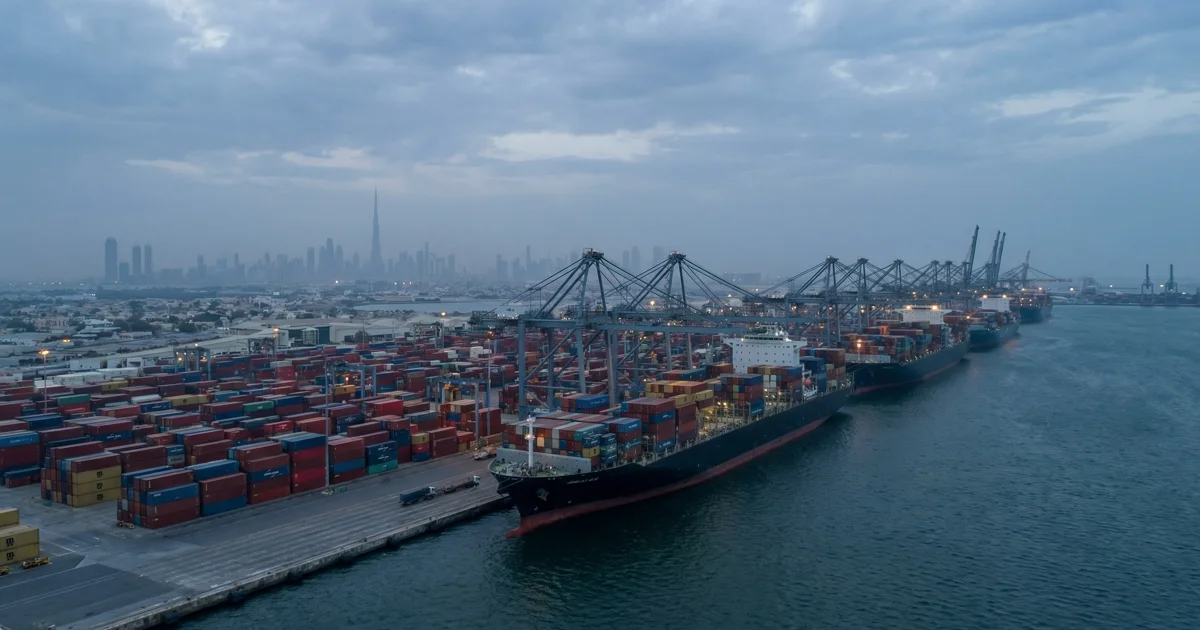
Jebel Ali came into 2026 from a position most regional hubs would envy. DP World had just posted a record 15.5 million TEU for 2024, up by 1 million TEU year on year, while breakbulk volumes rose 23% to 5.4 million tonnes. In 2025, DP World said Jebel Ali also recorded around 9% growth in origin-and-destination cargo. For any freight forwarder Dubai operator, that mattered. While Suez was still far below normal, Dubai was turning disruption into throughput.
Then the Strait of Hormuz closed.
On 2 March 2026, after renewed regional escalation, Iran shut the strait to what it called “unfriendly countries,” and multiple market trackers reported traffic falling roughly 70% within a day. If you had been watching the Red Sea, insurance markets, and carrier behavior, the shock was not really a surprise. If you had not, it felt like the floor disappeared overnight. Rates jumped, coverage vanished, air capacity tightened, and every client suddenly wanted a new routing plan by the same afternoon. This is the operating picture now for any freight forwarder Dubai team handling Gulf cargo.
How Dubai became the region's freight hub
Dubai did not become the region’s pressure valve by accident. It became the fallback hub because every other corridor around it got worse first, and every freight forwarder Dubai team felt that shift.
Start with Suez. By the first week of 2026, traffic through the canal was still about 60% below 2023 levels, according to BIMCO data cited by gCaptain. In Q4 2025, container transits through Suez were down 86% versus 2023. Once Asia-Europe loops moved around the Cape of Good Hope, the whole network changed: longer voyages, tighter vessel availability, more blank sailings, and more appetite for transshipment and sea-air improvisation.
Dubai was built for exactly that kind of chaos. Jebel Ali handled a record 15.5 million TEU in 2024, according to DP World and trade press coverage, and breakbulk climbed 23%. In 2025, DP World said O&D volumes at Jebel Ali grew around 9% year on year, showing cargo owners were leaning on Dubai and the UAE as a regional base, not just a pass-through point.
The sea-air angle is what made Dubai dangerous for competitors. MEED reported that the Dubai Logistics Corridor cut sea-air transfer time from four hours to under one hour. In practice, cargo from Asia could land in Jebel Ali, move fast into DXB, and keep flowing into Europe while ocean schedules broke down. For a Dubai freight forwarder, that was margin, speed, and relevance in one package.
So while much of the region was reacting to the crisis, forwarders in Dubai were unexpectedly in a winning position. They had port scale, airport connectivity, bonded infrastructure, and clients willing to pay for optionality.
The Hormuz shock: what happened in March 2026
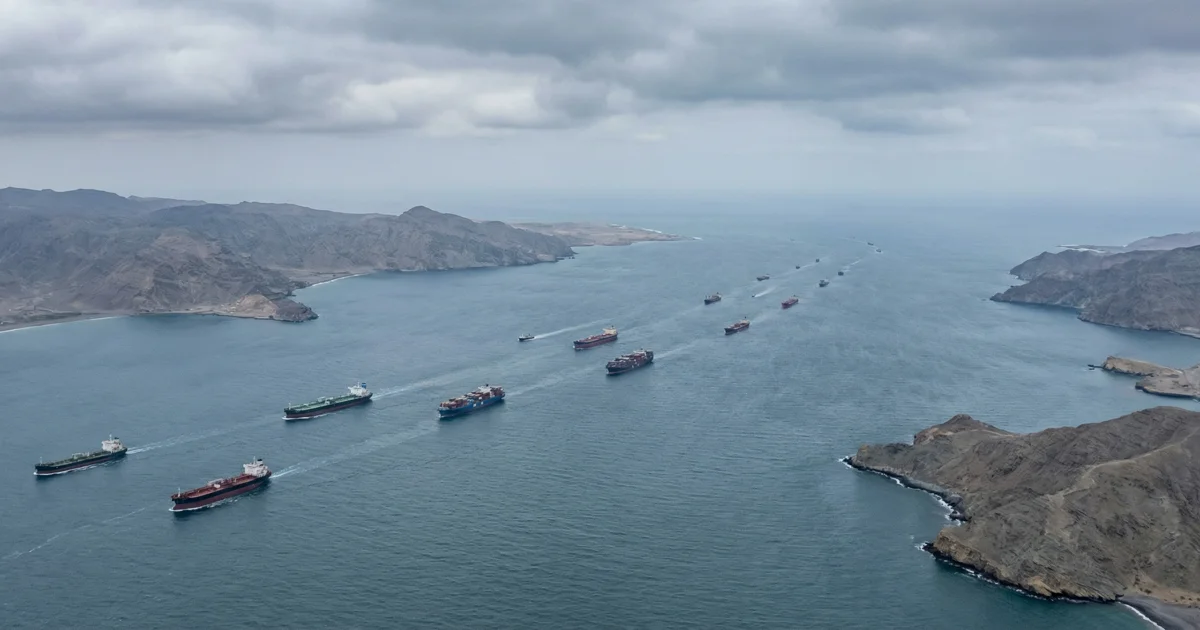
The March shock did not come out of a vacuum. On 28 February, the Houthis resumed attacks after the ceasefire framework collapsed. By that point, the Red Sea problem was unresolved. Suez had not normalized. Carriers had not returned with confidence. Insurers were already pricing fear.
Then on 2 March, Iran closed the Strait of Hormuz for “unfriendly countries.” The immediate market effect was brutal. Reports cited in the research pack showed traffic through Hormuz dropping around 70% in a single day. For a region already living with one major choke point in the Red Sea, this created a double bottleneck: one crisis to the west, one to the east.
The pricing response was immediate. Shanghai to Jebel Ali moved from around $1,800 to $4,000+ per FEU. India to the Middle East reportedly jumped by 900%, reaching $2,775 per FEU on some lanes. That destroys any rate request built on last week’s assumptions for a freight forwarder Dubai desk. It also widens the gap between what the line is charging and what the client thinks is still “normal.”
Insurance got worse at the same time. War-risk cover for Gulf calls was pulled back or quoted at levels many operators could not accept. Research in the pack points to war-risk premiums in the range of 3.5% to 10% of vessel value for the highest-risk transits. Even before a container moves, that changes the commercial logic of the whole voyage.
The operational disruption was not limited to sea freight. Jebel Ali reportedly paused operations after an intercepted airborne threat. DXB also faced temporary closure, and the research pack ties that to an estimated 18% hit to global air cargo capacity. So the usual fallback logic — “if ocean is unstable, push urgent cargo into air” — became weaker exactly when forwarders needed it most.
On 19 March, the United States launched a military operation aimed at reopening the strait. That helped the narrative, but not daily booking reality. Forwarders still had to quote under uncertainty, and clients still wanted guarantees nobody could honestly give.
The most practical response came from infrastructure, not speeches. DP World pushed alternative land corridors through Dammam in Saudi Arabia and Sohar in Oman. Once Hormuz becomes unstable, the winning route is not the one that looks elegant on a map. It is the one that still physically moves.
What this means for your operations right now
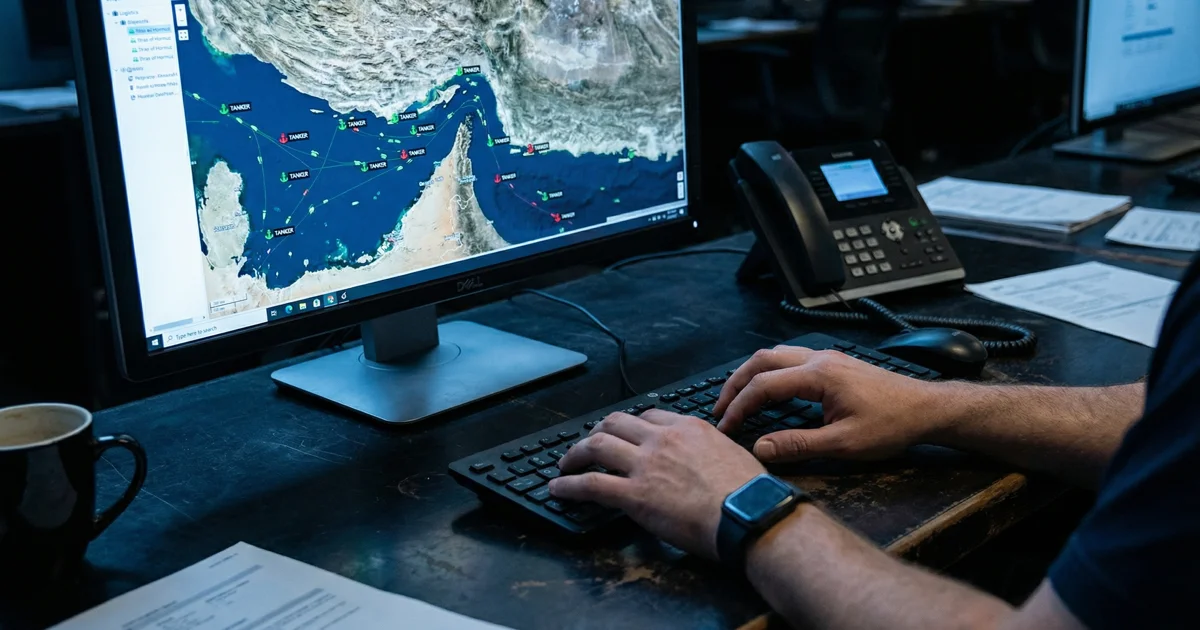
If you are running a 50-100 person forwarding business in Dubai, the real problem is not just delay. It is stacked unpredictability, and every Dubai freight forwarder is quoting inside that fog.
You are now dealing with a double bottleneck: Red Sea risk on one side, Hormuz risk on the other. Maersk and CMA CGM did not rush back into Suez because the underlying risk environment never really cleared. At the same time, lines kept adding surcharges and tightening commercial terms. Lars Jensen of Vespucci Maritime summed up the market mood well when he said carriers were introducing “as many and as high surcharges as humanly possible.”
That leaves the forwarder in the middle. The line is making money off disruption. The client is angry, confused, and usually under pressure from their own buyers. A freight forwarder Dubai team is expected to explain rate inflation, blank sailings, missing cover, and rolling ETAs in one phone call.
The biggest threat is not the transit delay itself. It is the communication vacuum around it. Once the client feels they understand the situation later than you do, you stop looking like an operator and start looking like part of the problem.
Contingency routing options today
There is no universal fix, but there is a practical playbook.
First, use the Dammam-to-Jebel Ali land corridor for cargo that can still reach Saudi gateways with fewer exposure points than a direct Gulf maritime call. For forwarders in Dubai, that route is now a commercial option, not a theoretical backup.
Second, work the Sohar option hard. Oman gives you a different geographic risk profile and can be the cleaner fallback when Gulf insurance or vessel behavior becomes unstable.
Third, if Hormuz is temporarily open and uplift is available, keep sea-air on the table for urgent freight from India or Asia through Jebel Ali into DXB. It is expensive, but still cheaper than a stockout for some cargo.
Fourth, for non-critical cargo, quote Cape of Good Hope routings early and honestly. Longer transit is painful, but false hope is worse.
Fifth, monitor war-risk markets daily, not weekly. Lloyd’s market signals, plus players like Atrium and Starr Companies, matter because insurance availability now shapes routing choices almost as much as vessel space does for any Dubai freight forwarder.
Sixth, build every quote with buffer language around transshipment, free time, and re-routing exposure. The forwarder who documents assumptions now will have fewer arguments later.
How to talk to your clients during the crisis
Silence is how you lose the account.
Your clients do not need theatre. They need a clear read on what changed, what it does to their shipment, what alternatives still exist, and when they will hear from you again. Facts first. No panic. No fake certainty. That discipline is now part of the job for a freight forwarder Dubai operator.
A simple client email can do more damage control than another internal escalation call. For example:
Subject: Update on your Gulf shipments after Hormuz disruption
We want to update you proactively on the regional freight situation affecting Gulf cargo. Since 2 March, vessel traffic through the Strait of Hormuz has fallen sharply after the closure announcement, and carriers and insurers have reacted with immediate rate increases, surcharges, and routing changes. This may affect transit time, final freight cost, and service reliability for your current and upcoming shipments.
We are reviewing your cargo lane by lane and will send you the best available routing options, including land-bridge and alternative port scenarios where relevant. For planning purposes, please expect longer lead times and keep buffer on any critical delivery dates. We will update you again by [time/date], even if the status remains unchanged.
That kind of message works because it gives facts, alternatives, and a timing commitment. In our work with forwarders in Dubai, the teams that send proactive updates lose far fewer clients than the teams that wait for complaints.
This is also where Quantika fits naturally. Not as a slogan, but as an operating discipline around timely client communication when the market turns hostile.
This is not a temporary glitch. It is a structural rewiring of regional logistics. Dubai still has the assets to outperform, but that only matters if you turn it into clear routing decisions and disciplined client updates. Managing client communication during the crisis? That's exactly what Quantika is built for. → v.marychenka@quantika.org